Rope Access Cleaning
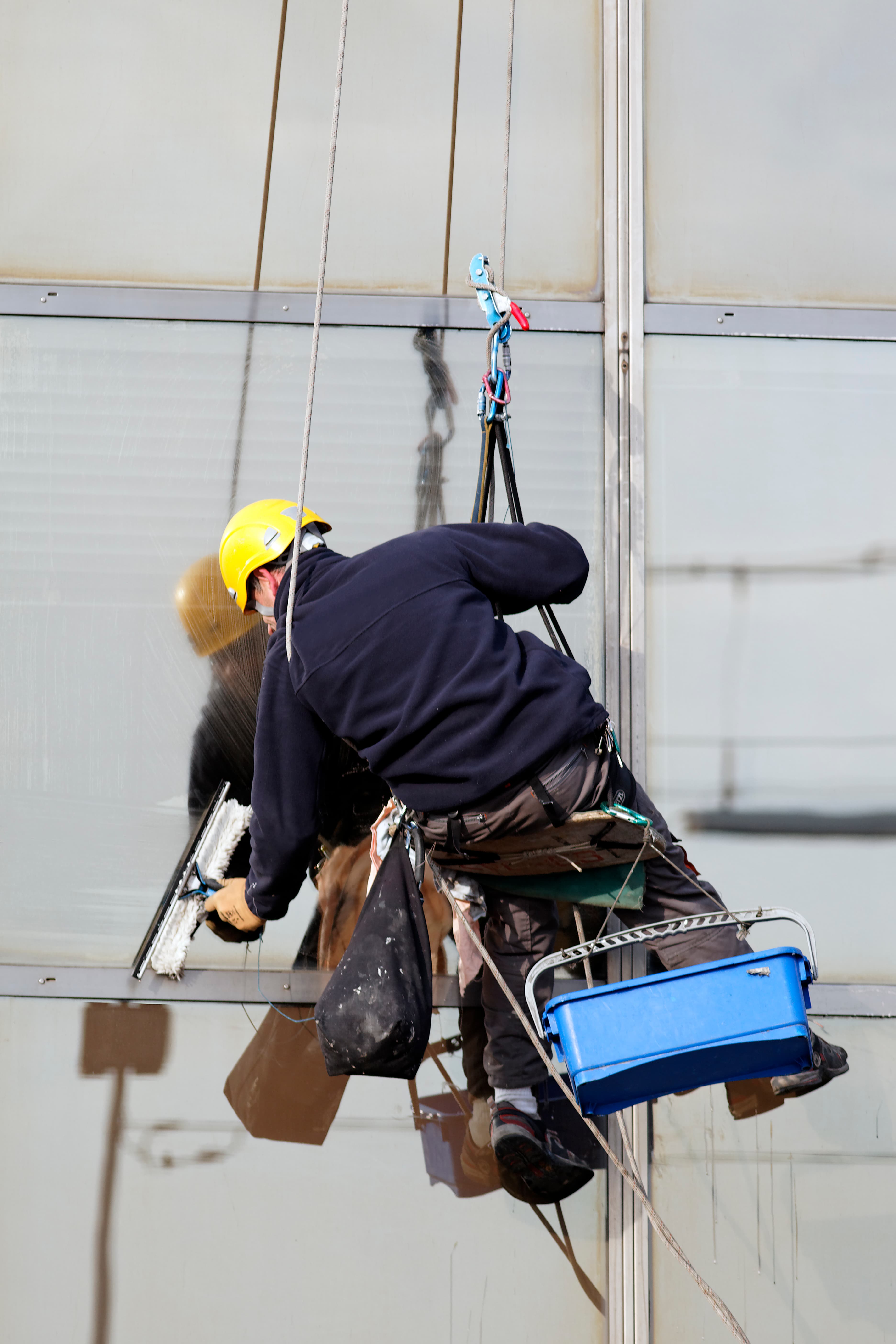
Trained technicians use approved rope systems, anchors and rescue arrangements. Rope access is useful for complex elevations and targeted areas, subject to anchor suitability, weather limits and a specific rescue plan.
A practical guide to specialist access methods, glass and facade care, safety planning, cost factors and maintenance schedules for high-rise commercial buildings.
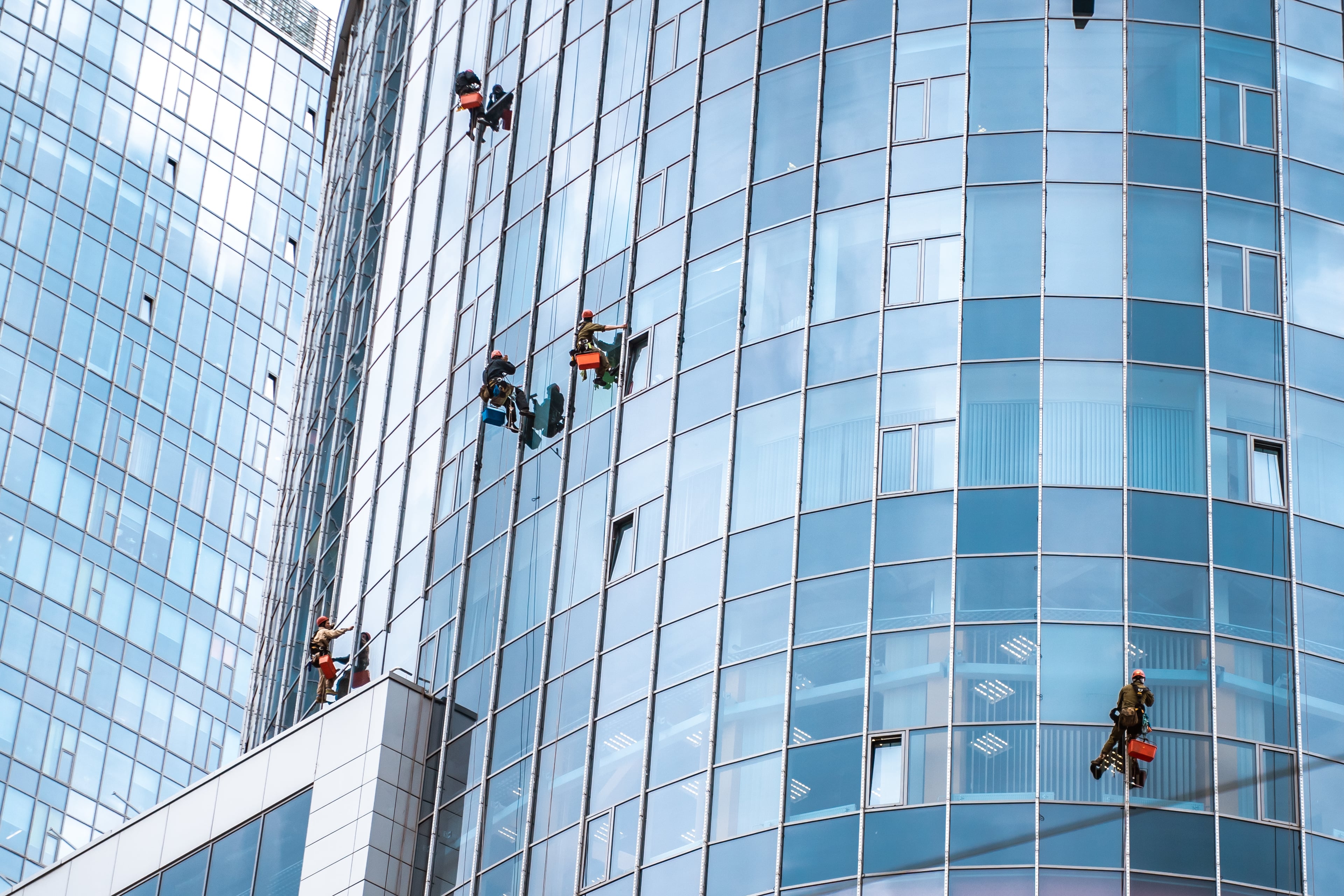
High-rise glass buildings have become a defining feature of modern commercial architecture. From corporate offices and business parks to hotels, hospitals and commercial towers, glass facades create a professional appearance, allow natural light into interior spaces and contribute to a building's overall architectural appeal. However, maintaining these exterior surfaces requires more than occasional washing. Dust, pollution, rainwater deposits, mineral stains and environmental contaminants can gradually affect the appearance and condition of a building's facade.
High-rise glass cleaning is a specialised commercial cleaning service that involves removing dirt, stains and accumulated contaminants from glass surfaces at considerable heights using appropriate access equipment, cleaning methods and safety procedures. Unlike conventional window cleaning, cleaning the exterior of a multi-storey building requires detailed site assessment, access planning, trained personnel and an understanding of the materials used in the facade system.
For facility managers and commercial property owners, maintaining a high-rise glass facade is an important part of overall building maintenance. A structured cleaning programme can help preserve the building's appearance, support the long-term care of exterior materials, improve the quality of the property's presentation and reduce the risk of avoidable maintenance problems.
This guide explains the major challenges associated with high-rise facade cleaning, the different cleaning methods available, essential safety considerations, factors affecting cleaning costs and the maintenance practices commercial property managers should follow when selecting a professional service provider.
The scope of work may extend beyond the glass itself. Depending on the building's design and the agreed service requirements, it can include cleaning window frames, mullions, transoms, exterior ledges and other accessible facade elements.
The cleaning process varies according to building height, facade design, surface materials, accessibility and the surrounding environment. A commercial tower near a busy road may accumulate traffic dust and pollutants more quickly than a less exposed building; coastal properties may collect salt deposits, and construction activity may require more frequent cleaning.
Professional high-rise glass cleaning therefore begins with understanding the building's specific requirements rather than applying the same procedure to every property. Conventional window cleaning generally applies to safely reachable ground, interior or standard-platform surfaces, while high-rise work presents additional height, weather, geometry, restricted-access and specialist-equipment challenges.
The principal differences are engineered access requirements, documented safety planning, material-specific methodology, operational coordination and systematic quality control across large facade areas.
A clean exterior supports asset presentation, facade observation and predictable maintenance while helping remove deposits before they become established.
The exterior of a commercial building creates an immediate visual impression for employees, clients, visitors, tenants and prospective business partners.
Dust-covered windows, visible streaks, watermarks and stained facade panels can affect the overall presentation of a property. This is particularly important for corporate headquarters, hotels, commercial offices and premium retail developments where the building's appearance forms part of its professional identity.
Scheduled glass facade cleaning helps maintain a consistent exterior appearance and supports the property's presentation throughout the year.
Glass surfaces collect a combination of airborne dust, traffic pollution, rainwater residue, bird droppings, pollen and other environmental contaminants.
In busy commercial areas, these deposits can accumulate rapidly because of vehicle movement, construction activity and surrounding industrial operations.
When deposits remain on the surface for extended periods, they may become more difficult to remove. Some contaminants can also react with or affect certain facade materials, depending on their composition and the duration of exposure.
Routine high-rise glass cleaning removes these deposits before they become more difficult to manage.
Glass panels are only one part of a building's exterior system. The facade may also contain metal frames, sealants, gaskets, drainage channels and other components that require periodic inspection and maintenance.
Cleaning does not replace a technical facade inspection. However, observations made during cleaning can help facility managers identify issues that require assessment by a qualified building-envelope specialist.
Clean glass can improve visual clarity and reduce the appearance of surface deposits that interfere with the view through windows.
The amount of natural light entering a building depends on several factors, including glass specifications, coatings, orientation, shading and interior conditions. Cleaning alone cannot correct problems caused by the glazing design or other building elements, but removing accumulated dirt helps maintain the glass's intended clarity.
Commercial tenants expect the buildings they occupy to be maintained consistently. Exterior cleanliness contributes to the overall perception of building management, particularly in properties where the facade is visible from offices, reception areas and meeting rooms.
A documented cleaning schedule also helps property managers communicate maintenance activities to tenants and coordinate work with minimal disruption.
Allowing contaminants to accumulate can make subsequent cleaning more labour-intensive, particularly where mineral deposits, pollution films or construction residue have become difficult to remove.
Regular maintenance may help prevent some deposits from becoming established and allow issues to be identified earlier.
However, cleaning frequency should be based on the building's actual exposure, facade materials and condition. Excessive cleaning is not automatically better, because unsuitable chemicals, abrasive methods or incorrect equipment can damage certain surfaces.
High-rise facade cleaning requires technical planning and practical experience. Building characteristics and site conditions can affect safety, access and quality.
As building height increases, reaching exterior glass surfaces becomes more complex. Some buildings have relatively straightforward elevations, while others feature recessed windows, projecting balconies, curved glass, narrow ledges or irregular architectural profiles.
Wind is a major consideration when cleaning elevated exterior surfaces. Even when conditions appear manageable at ground level, wind exposure may be substantially different at the building's upper floors.
Commercial buildings located near major roads, transport corridors and construction sites are exposed to airborne contaminants that settle on exterior surfaces. The cleaning method should be selected according to the type of contamination present. Ordinary dust may require a different treatment from established mineral deposits or oily pollution residue.
Rainwater and cleaning water can leave visible marks when dissolved minerals remain on the glass after evaporation. Hard water can be a particular concern where water is allowed to dry naturally on exposed glazing. In some cases, repeated deposits may become difficult to remove using routine cleaning techniques.
Not every high-rise building has the same exterior construction. Some properties use conventional glazed windows, while others incorporate curtain-wall systems, tinted glass, reflective coatings, aluminium framing, stone cladding or mixed-material facades.
High-rise commercial properties often remain operational during cleaning activities. Offices, hospitals, hotels and retail developments may have strict requirements for noise, access, visitor movement and service interruptions.
Certain facade elements are more difficult to clean than flat glass panels. Examples include deep recesses, narrow mullions, external fins, decorative screens, sloping glazing and projecting architectural features. These areas can trap dirt and may require specialised tools or alternative access arrangements.
An effective programme accounts for every exterior material, because compatible cleaning for glass does not necessarily mean compatibility for adjacent frames or sealants.
Clear glass and tinted glass can generally be cleaned using suitable non-abrasive products and tools, but the correct method depends on the glazing specification and any applied film or coating.
The cleaning team should avoid tools that may scratch the surface and should verify that cleaning chemicals are compatible with the installed glass system.
Reflective glass and other coated glazing products may have specialised surface treatments designed to control solar heat gain, glare or energy performance.
Depending on the product, the coating may be located on an exposed surface or protected within the glazing assembly.
Cleaning procedures should follow the manufacturer's recommendations. Abrasive materials, aggressive chemicals and unapproved scraping tools can damage certain coatings or alter the surface appearance.
Modern commercial towers frequently use curtain-wall systems or insulated glazing units installed within metal framing.
The visible glass may be only one component of a larger assembly that includes mullions, transoms, gaskets, sealants, drainage paths and fixing elements.
During cleaning, excessive water pressure and inappropriate chemicals should be avoided around joints and seals. Drainage openings should not be blocked, and any visible damage should be reported to the building management team.
Aluminium frames and other metal elements can accumulate dust, pollution residue and watermarks.
Their finish may be anodised, painted, powder-coated or otherwise treated. Cleaning products must be suitable for that particular finish.
Strong alkaline or acidic chemicals can discolour or damage some metal surfaces. Abrasive pads may leave visible marks, especially on polished or coated finishes.
Sealants and gaskets help accommodate movement and maintain weather resistance in many facade systems.
These materials can deteriorate because of ageing, exposure, movement or incompatible chemical contact. During cleaning, the team should avoid chemicals that may adversely affect the installed sealant and should not pull, cut or disturb joints.
Visible cracks, gaps or separation should be documented and referred to the building's maintenance team.
Some buildings combine glass with stone, composite panels, painted surfaces and decorative metalwork.
Where different materials meet, cleaning requires particular care to prevent chemical runoff, staining or damage to adjacent finishes.
The contractor should establish the boundaries of each material, select compatible cleaning methods and test products in an inconspicuous area when necessary.
There is no single method suitable for every tower. The selected technique must reflect building height, facade geometry, access availability, contamination, safety controls and maintenance objectives.
Trained technicians use approved rope systems, anchors and rescue arrangements. Rope access is useful for complex elevations and targeted areas, subject to anchor suitability, weather limits and a specific rescue plan.

Suspended platforms provide a stable work zone for repetitive cleaning across large facade areas when permanent supports, inspections and ground-level controls are suitable.
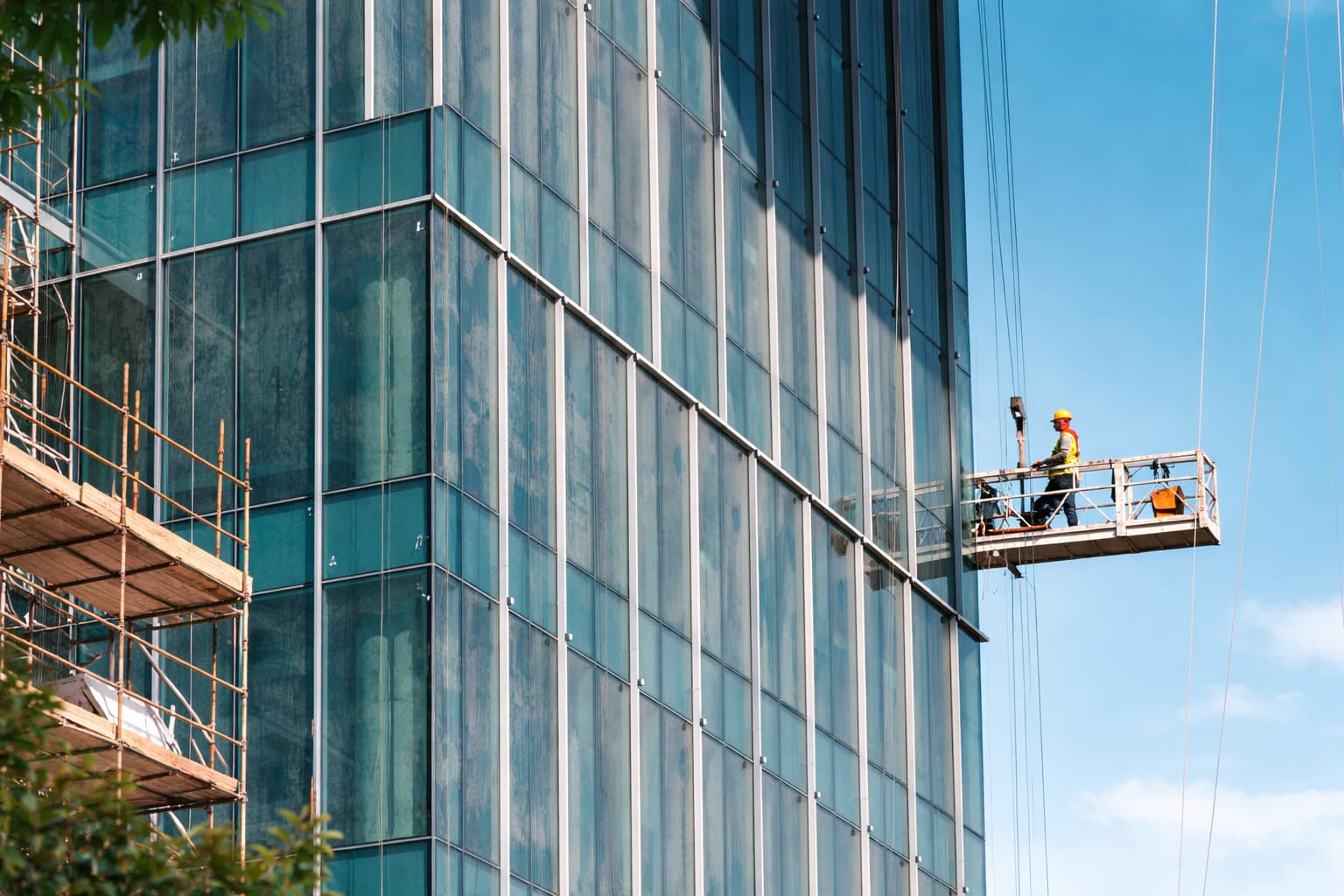
A permanent BMU may provide repeatable roof-supported access for large glazed elevations. It must be used only by authorised personnel after reach, inspection and system-status checks.
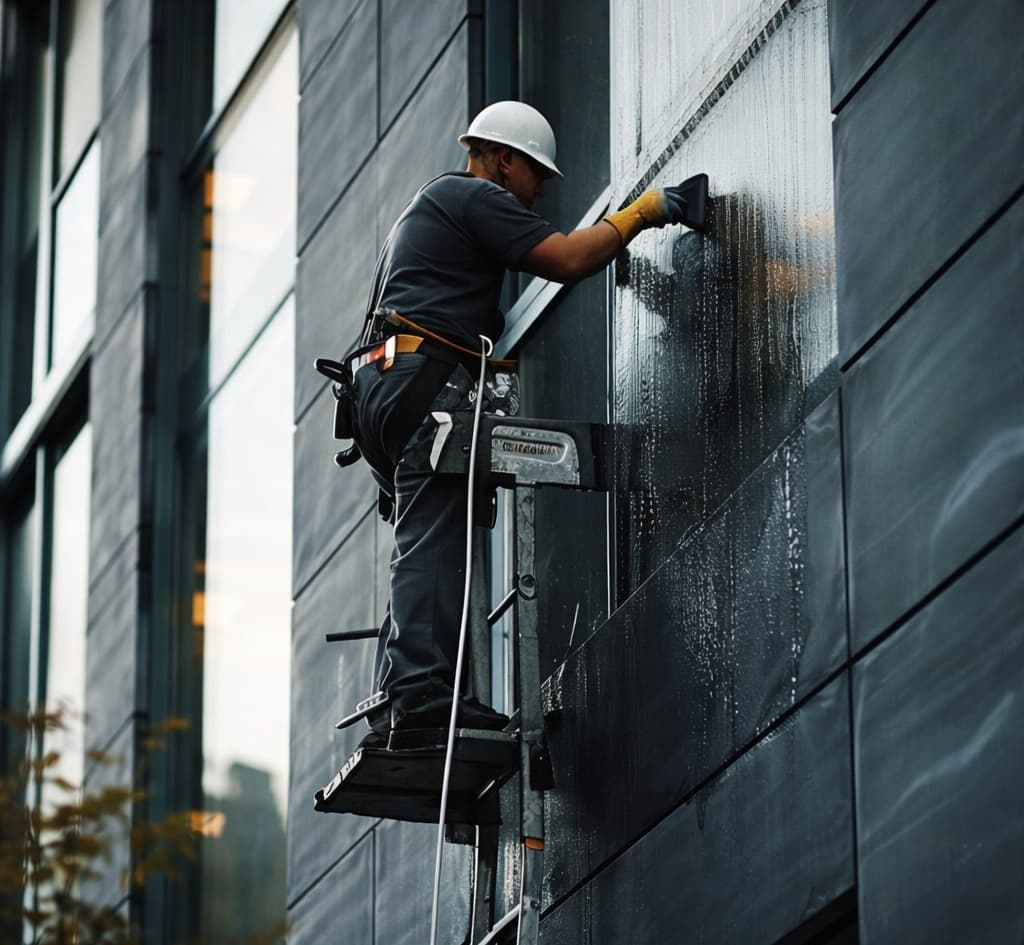
Water-fed poles can clean accessible glazing below elevated working positions. Purified water may reduce spotting, but reach, wind control, contamination and surface suitability limit the method.
Mobile elevating work platforms are suitable for selected elevations where ground bearing, setup space, reach and overhead-clearance conditions permit safe operation.
Technicians may use suitable applicators, squeegees and microfibre tools with compatible solutions to loosen contamination and control the final rinse and drying process.
Controlled application of a material-compatible solution can suit selected facade surfaces, but high pressure must not be directed at seals, joints, vents or sensitive components.
A safe high-rise cleaning programme is designed before work starts and includes access, weather, occupancy and emergency controls.
Record building height, glazing, facade layout, balconies, ledges, anchors, permanent access systems, ground routes, electrical hazards, drainage, occupied areas and rescue access.
Verify work-at-height, equipment, supervision and rescue competence for the access system assigned to each task.
Check ropes, connectors, harnesses, anchors, platforms, BMUs, controls, emergency lowering, PPE and communications before use.
Identify falls, dropped tools, equipment movement, weather, electrical hazards, debris and building access restrictions, with specific controls and responsibilities.
Define task-specific rescue equipment, responsible personnel, communications, emergency access and escalation procedures; do not rely on a general emergency number alone.
Apply equipment and method limits for wind, rain, lightning and visibility. Suspend work where conditions exceed controls rather than pressuring personnel to continue.
Control tools, water, debris and ground movement with barriers, signage, traffic or pedestrian management, entrances restrictions and tenant communication.
Match products to glass coatings, frames, sealants and contamination; follow safety data, handling, storage, mixing and rinsing requirements, and test uncertain products.
Protect entrances, drainage, slip hazards, sensitive electrical installations and adjacent surfaces from water ingress and runoff.
Retain method statements, risk assessments, inspection records, competency evidence, weather checks, completed areas, defects, near misses and quality results.
The cost of high-rise glass cleaning varies considerably between buildings. A quotation should be based on the actual facade area, access requirements, condition of the glass, cleaning frequency and scope of work.
Comparing quotations solely on the basis of a price per square foot may be misleading if contractors have included different surfaces, equipment, safety arrangements or service levels.
The total area requiring cleaning is one of the main factors affecting the overall cost.
However, the number of square feet alone does not determine the final price. Two buildings with similar glass areas may require different levels of labour, equipment and preparation because of differences in height, geometry and access arrangement.
The quotation should clarify whether it covers exterior glazing, selected facade elements, frames, ledges or specific floors.
Taller buildings generally require more complex access arrangements and longer equipment deployment or repositioning times.
The height of the building may also affect weather exposure, staffing and the time needed to complete the cleaning section.
The actual cost impact depends on the access method and building configuration rather than height alone.
A flat, unobstructed glass facade may be easier to clean than a building with recessed windows, projected curved glazing or multiple setbacks.
Difficult-to-reach sections may require additional equipment or alternative work methods.
A site survey helps identify these conditions before the quotation is finalised.
Regular maintenance may be more straightforward than restoring glass that has accumulated heavy pollution, dust or residue over an extended period.
Where mineral staining, construction residue or persistent deposits are present, additional preparation or treatment may be required.
A planned maintenance contract may also allow work to be scheduled more efficiently than occasional emergency cleaning.
Routine dust removal differs from treatment of bird droppings, paint splashes, cement residue, stubborn mineral deposits and established stains.
Some contaminants may require specialist cleaning methods or additional treatment before restoration work can be completed.
The cleaning contractor should identify exceptional restoration work separately from routine cleaning wherever possible.
The chosen access method affects labour, equipment mobilisation, setup time and logistical requirements.
Costs may include use of rope access systems, suspended platforms, building maintenance units, water-fed systems, MEWPs and specialised cleaning equipment.
Equipment hire, transport, supervision and staffing may also contribute to the final price.
There is no universal cleaning frequency for every commercial building. The appropriate interval depends on environmental exposure, facade materials, building use, weather conditions and the property's appearance standards.
Commercial towers near major roads, construction zones or dense business districts may accumulate visible dust and pollution relatively quickly. A facility manager may consider quarterly cleaning as an initial planning option, with more frequent cleaning for heavily exposed elevations if inspections show that it is necessary.
Buildings where facade presentation is particularly important may require a more structured schedule. A quarterly or twice-yearly programme may be considered depending on environmental exposure, tenant expectations, glass condition and budget. The schedule should be based on the property's actual requirements rather than its classification as a premium building alone.
Buildings exposed to coastal air may accumulate salt deposits and moisture-related contamination. The appropriate frequency depends on the distance from the coast, prevailing wind exposure, facade design and material specifications. Regular visual checks can help determine whether cleaning is required more frequently.
Properties exposed to ongoing construction may require temporary increases in inspection and cleaning frequency. Construction dust and certain residues can be difficult to remove if left untreated. However, cement, mortar, paint and other construction materials may require specialist treatment. Facility managers should ensure that construction-related cleaning is performed using procedures compatible with the glass and facade system.
Hospitals, hotels and other customer-facing buildings may have stricter appearance requirements and operational constraints. The cleaning plan should account for entrances, patient or guest areas, public access, privacy and service continuity. The schedule should also coordinate with other maintenance activities to reduce disruption.
Before approving a maintenance schedule, How quickly visible dirt accumulates. The presence of coastal salt or other environmental deposits. The condition of frames, seals and other facade components. A practical approach is to begin with an appropriate schedule, inspect the results and adjust the frequency using documented observations. Record accumulation after every visit and adjust the schedule instead of relying only on a fixed calendar.
High-rise glass cleaning is most effective when integrated into a broader building maintenance programme. Instead of treating facade cleaning as an isolated activity, facility managers should coordinate it with inspections, defect reporting, seasonal maintenance and other exterior cleaning requirements.
Create a record of the building's exterior materials, glazing systems, facade elevations and access arrangements. Where available, use architectural drawings, maintenance manuals and information supplied by the building developer or facade contractor. The inventory should identify unusual glass specifications, sensitive coatings, restricted areas and sections that require special access.
Before cleaning, document the condition of the facade. Photographs and inspection notes can help distinguish existing stains or damage from issues observed during the cleaning operation. Record areas affected by persistent deposits, visible sealant deterioration, damaged glass or other concerns requiring attention. The cleaning team should not attempt unauthorised repairs to structural or weatherproofing components.
Create a calendar that specifies the proposed cleaning frequency, responsible contractor, areas covered and inspection requirements. The schedule should reflect the building's exposure, operating hours and access restrictions. Where appropriate, divide the facade into sections so that work can be monitored and scheduled efficiently.
Before each cleaning cycle, verify that the planned access system is suitable and available. Review the relevant risk assessment, equipment condition, weather criteria, ground-level restrictions and rescue arrangements. Any significant change in site conditions should trigger a review of the work plan before activities continue.
The cleaning method should be appropriate for the glass, frame materials, surface coatings and type of contamination. Cleaning products should be checked for compatibility, and testing should be performed where necessary. The procedure should also address runoff, rinsing and the protection of adjacent surfaces.
Inspect representative areas during the cleaning process and review the completed facade after work has finished. Quality checks may cover Visible streaks or watermarks, Consistency across adjacent glass panels, Missed sections or inaccessible areas, Remaining dirt or contamination, Cleanliness of frames and other included components.
Create a record of issues identified during cleaning, including the affected location, date, photographic evidence and recommended next action. Classify the issue according to its nature and urgency, and refer technical concerns to the appropriate specialist. A defect register helps facility managers distinguish routine cleaning requirements from repairs, facade investigations and other maintenance work.
After every cleaning cycle, evaluate the quality of work, completion time, operational disruption and any safety or access issues. Compare the observed dirt accumulation with the existing schedule. If the facade becomes visibly dirty before the next planned cleaning, consider whether the interval should be shortened. If the building remains clean for longer, a different interval may be more appropriate. This review helps maintain an evidence-based programme instead of relying on a fixed schedule indefinitely.
This illustrative framework should be adapted to the building's actual conditions, exposure and operating requirements. It is not a substitute for inspections or urgent maintenance.
Properties affected by heavy contamination or unusual environmental conditions may require additional cleaning and checks throughout the year.
Selecting a high-rise cleaning contractor involves more than comparing prices. Facility managers need a provider capable of delivering the agreed cleaning scope while managing access, safety, material compatibility and operational requirements.
Ask whether the contractor has relevant experience with buildings of comparable height, facade design and operational complexity.
Experience with low-rise window cleaning does not automatically demonstrate the ability to manage a high-rise facade project.
Request examples of comparable projects and references that can be verified where appropriate.
The contractor should explain how the building's exterior will be accessed and why the proposed method is suitable.
Ask whether the approach accounts for recessed sections, projecting features, restricted elevations and other difficult areas.
The proposal should also identify any sections that cannot be reached using the selected equipment.
Verify that personnel have the training, qualifications and authorisations required for their specific tasks.
For specialised access systems, ask about equipment-specific competency, supervision and emergency procedures.
The contractor should be able to explain who is responsible for checking equipment and confirming that the work method remains safe.
Request relevant safety documents before work begins.
Depending on the project, these may include a site-specific risk assessment, method statement, equipment inspection records, personnel competency records and a rescue plan.
The documents should reflect the actual building and work method rather than being generic paperwork unrelated to the site.
Confirm that the contractor maintains appropriate insurance for the activities being undertaken and that the contractual responsibilities of both parties are clearly documented.
The scope should address damage, incident reporting, access permissions, site restrictions and other relevant obligations.
The specific insurance requirements should be assessed in the context of the project and applicable law.
Ask how the contractor determines which cleaning products and tools are suitable for the installed glazing and frame materials.
A capable provider should recognise that coated glass, metal finishes, sealants and mixed-material facades may require different procedures.
The contractor should also explain how it handles unusual stains and when specialist restoration advice is needed.
A detailed proposal should state exactly which surfaces will be cleaned.
Confirm whether the scope includes glass panels, frames, mullions, transoms, ledges and other specified facade components.
Clarify whether the service includes only routine cleaning or also addresses construction residue, mineral staining or other specialist treatments.
Ask how completed work will be inspected and documented.
Useful deliverables may include before-and-after photographs, completed-area records, defect reports and recommendations for future cleaning.
The contractor should also have a clear procedure for addressing missed sections or quality concerns.
Commercial buildings may have restrictions on working hours, access routes, parking, water usage and pedestrian movement.
The contractor should demonstrate that it can coordinate with the building's facility management and security teams.
For occupied properties, ask how the team will minimise disruption to tenants, visitors and daily operations.
The proposal should explain the basis of the quotation, the included services and any additional charges.
A low initial price may not represent the best value if it excludes important surfaces, necessary equipment, safety arrangements or quality inspections.
Compare quotations on a like-for-like basis and evaluate the proposed methodology alongside the commercial terms.
The lowest quotation may exclude essential services or assume an access method that is unsuitable for the building. Facility managers should compare scope, safety arrangements, material compatibility, equipment and quality assurance before making a decision.
Different glass types, coatings and frame materials have different requirements.A standard cleaning solution or tool should not be applied to every surface without checking compatibility. The cleaning plan should be tailored to the building's actual construction.
Attempting to maintain a schedule during unsuitable weather can expose workers and others to unnecessary risk.Clear weather-monitoring procedures and stop-work criteria should be established before work begins.
High-rise cleaning hazards are not limited to the workers on the facade. Dropped tools, runoff and equipment movement can affect pedestrians, vehicles and building entrances. Appropriate exclusion zones and site controls are essential.
Infrequent cleaning can allow certain deposits to become harder to remove. Facility managers should monitor actual facade conditions and adjust the cleaning interval where necessary.
Unsuitable cleaning methods can scratch glass, damage coatings, discolour frames or affect sealants. Specialist treatment should be used for difficult stains, with material compatibility verified before work begins.
Without a condition record, it may be difficult to determine whether a defect was present before cleaning.Photographs and inspection notes help establish a clearer record of the facade's condition.
Cleaning can reveal visible defects, but it does not establish the structural integrity or weather resistance of the building envelope. Loose panels, damaged anchors, failed sealants or other technical concerns should be referred to qualified specialists.
Use the following checklist when planning a cleaning project or reviewing a contractor's proposal.
A documented checklist makes it easier to coordinate contractors, review service quality and maintain a consistent approach across multiple commercial properties.
Answers to common questions about methods, safety, costs, schedules and material care.
High-rise glass cleaning is the specialised cleaning of exterior glass panels, windows and glazed facade systems on multi-storey buildings. It uses suitable access methods, cleaning tools and safety procedures to remove dirt, pollution residue, watermarks and other contaminants without damaging the facade.
High-rise facade cleaning involves additional access, equipment and safety considerations because the work takes place at significant heights. It may require rope access, suspended platforms, building maintenance units or other engineered systems and planning for weather, pedestrian safety and facade materials.
The best method depends on building height, facade design, accessibility, glass type and requirements. Rope access may suit complex elevations, while suspended platforms or building maintenance units may suit buildings designed for those systems. A site assessment determines the appropriate method.
Cleaning frequency depends on environmental exposure, building use, facade materials and appearance requirements. Some commercial properties use quarterly cleaning, while others require more or less frequent service. Facility managers should adjust the schedule based on observed accumulation.
Key factors include building height, glass area, facade complexity, accessibility, contamination, equipment, labour, safety arrangements, mobilisation, water availability and required reporting. Scope and quality standards also affect the quotation.
Rope access can be appropriate when the building, task and access arrangement are suitable and competent personnel perform the work. Safe execution requires a planned system, suitable anchors, protective equipment, weather controls, supervision and a task-specific rescue plan.
Cleaning may be possible during suitable weather windows, but rain, wind, lightning and reduced visibility can make elevated work unsafe or reduce quality. Work should be postponed whenever conditions do not meet equipment limits, risk controls or applicable requirements.
Rain may remove some loose dust, but it does not reliably remove pollution residue, bird droppings, mineral deposits or other contaminants. Evaporating rainwater can also leave marks, so scheduled cleaning remains necessary for consistent appearance.
Suitable products can include compatible glass cleaners, mild detergents and treated water. Selection depends on the glass specification, coatings, frames and contamination. Abrasive products and aggressive chemicals should be avoided unless material compatibility is confirmed.
Pressure washing may suit selected surfaces under controlled conditions, but it should not be applied indiscriminately to glazing systems. Excessive pressure can damage finishes or disturb seals. Pressure, distance and method should follow a site-specific assessment.
Appropriate cleaning and controlled rinsing, including treated water, may reduce watermarks. Established deposits may require specialist treatment after the glass and coating are identified. Abrasive tools and untested chemicals should not be used.
It depends on the agreed scope. Some contracts cover glass only, while others include frames, mullions, transoms, ledges and specified components. Confirm inclusions and exclusions before approving the quotation.
Yes. Unsuitable tools, abrasive materials, incompatible chemicals or incorrect procedures can damage glass and coatings. A professional plan should identify the glazing specification, follow manufacturer guidance and use appropriate tools and products.
Important precautions include a site risk assessment, suitable access method, competent personnel, inspected equipment, protective equipment, weather monitoring, ground exclusion zones and emergency rescue arrangements.
Duration depends on building height, glass area, facade geometry, method, contamination, weather and operating restrictions. Large or complex buildings may require multiple working periods, which should be defined after assessment.
Yes. Work can often be planned around occupied building operations when access and safety controls are in place. Coordination with facility management, security and tenants helps manage entrances, pedestrian routes and working hours.
A programme may include scheduled cleaning, specified facade components, condition observations, photographs, defect reporting and periodic frequency reviews. Structural assessment and repair work should be separately defined unless expressly included.
Compare relevant experience, proposed access methods, staff competency, safety documents, material compatibility, scope, quality controls, reporting and pricing transparency. Evaluate quotations on a like-for-like basis rather than by price alone.
Some construction residues can be removed, but treatment depends on the material, deposit age and glass specification. Cement, paint and adhesive residues can require specialist methods. Improper scraping or chemicals may cause permanent damage.
Provide the building location, height, approximate glass area, facade design, current condition and preferred cleaning frequency. Share drawings or access information if available, then request a site assessment and a detailed quotation covering scope, access, safety and quality requirements.
High-rise glass cleaning is an important part of maintaining commercial buildings, particularly where exterior appearance, tenant expectations and long-term facade care are priorities.
A successful programme requires more than removing visible dirt. It involves understanding the glazing system, choosing an appropriate access method, selecting compatible cleaning products, managing work-at-height risks and coordinating activities with building operations.
For facility managers, the most effective approach is to combine scheduled cleaning with documented inspections, clear contractor responsibilities and regular reviews of the facade's condition. This helps establish a maintenance programme based on actual building requirements rather than a one-size-fits-all schedule.
When evaluating a high-rise facade cleaning service, consider relevant experience, safety planning, access capabilities, quality assurance and transparent pricing. A detailed site assessment and clearly defined scope reduce uncertainty and support better maintenance decisions.
Get a site-specific assessment covering access, glass specification, safety, cleaning scope, schedule and reporting.
+91 95294 53682