
Glass facade cleaning
Removes dust, mineral marks, traffic stains and environmental grime from structural glass. Appropriate cleaning can restore clarity and help maintain the surface.
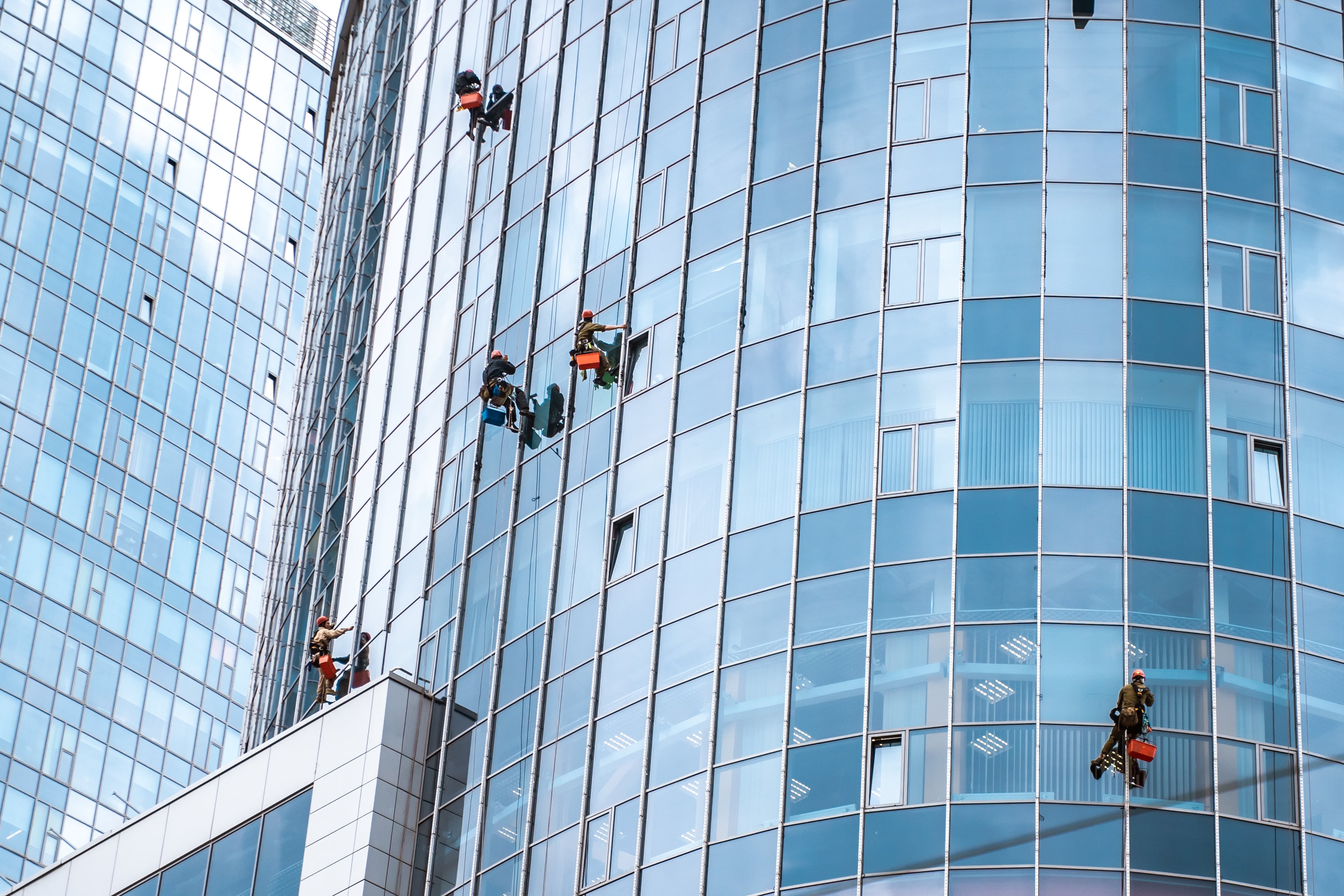
A building's facade is its exterior face or front elevation: the visual boundary that defines its architectural character, professional appeal and presence. Over time, exterior surfaces collect dust, airborne grime, industrial pollution and weather-related stains.
For commercial properties, regular exterior maintenance helps protect presentation and supports planned upkeep. Professional facade cleaning uses suitable techniques, access equipment and safety procedures to clean exterior surfaces at height and across large areas.
This complete guide covers commercial facade maintenance, including the surfaces and services involved, common cleaning methods, safety considerations and practical guidance on cleaning frequency.
Facade cleaning is the professional process of removing dirt, pollution, water marks, dust and environmental stains from a building's exterior surfaces. The term facade refers to the outer visual face or exterior envelope of a structure.
Unlike indoor cleaning, exterior building cleaning deals with weather exposure, extensive surface areas and physical height. Commercial and high-rise buildings may need professional cleaning methods such as rope access or water-fed poles, along with site-specific safety planning and appropriate cleaning solutions.
A commercial building's exterior includes structural and decorative elements. A comprehensive cleaning scope can cover:
Clear, tinted or reflective glass used across a building exterior.
Individual commercial window units and glass panes.
Aluminum, steel or composite framing around window systems.
Concrete, stone cladding, metal panels and painted wall surfaces.
Decorative elements, louvers, awnings and entrance canopies.
Parapets, ledges, signage panels and structural trims exposed to weather.
Commercial exteriors are continually exposed to natural and man-made elements that affect their appearance and surface condition. Understanding the sources of buildup helps facility managers plan regular maintenance.
Dry soil, loose particles and windblown dust collect on exterior ledges, frames and glass.
Vehicle emissions and industrial exhaust can create a dark, greasy film on building materials.
Rain carries atmospheric particles that may leave streaks and mineral residue as surfaces dry.
Mineral deposits, hard-water runoff and chemical exposure can cause persistent glass staining.
Sunlight, humidity, seasonal weather and bird droppings gradually affect exterior coatings and finishes.
Allowing environmental buildup to remain unchecked can affect a property's presentation and increase the work needed to maintain exterior surfaces.
Layers of grime reduce the natural clarity of glass and make exterior panels look aged or unmaintained.
A dirty exterior can project an unprofessional image to clients, visitors and corporate tenants.
Dirt can retain moisture and contaminants around sealants, paint and metal finishes.
Sun and weather exposure can make accumulated pollution and mineral deposits more difficult to remove.
A planned facade-cleaning schedule helps maintain property presentation, manage buildup and identify visible maintenance concerns before they are overlooked.
A professional facade-cleaning project is not one-size-fits-all. The scope depends on a building's architecture, materials, height, access and condition. A full exterior cleaning plan may combine several specialist services.
A professional facade-cleaning project combines specialist services based on a building's materials, architecture, height and access requirements.
Removes dust, mineral marks, traffic stains and environmental grime from structural glass. Appropriate cleaning can restore clarity and help maintain the surface.
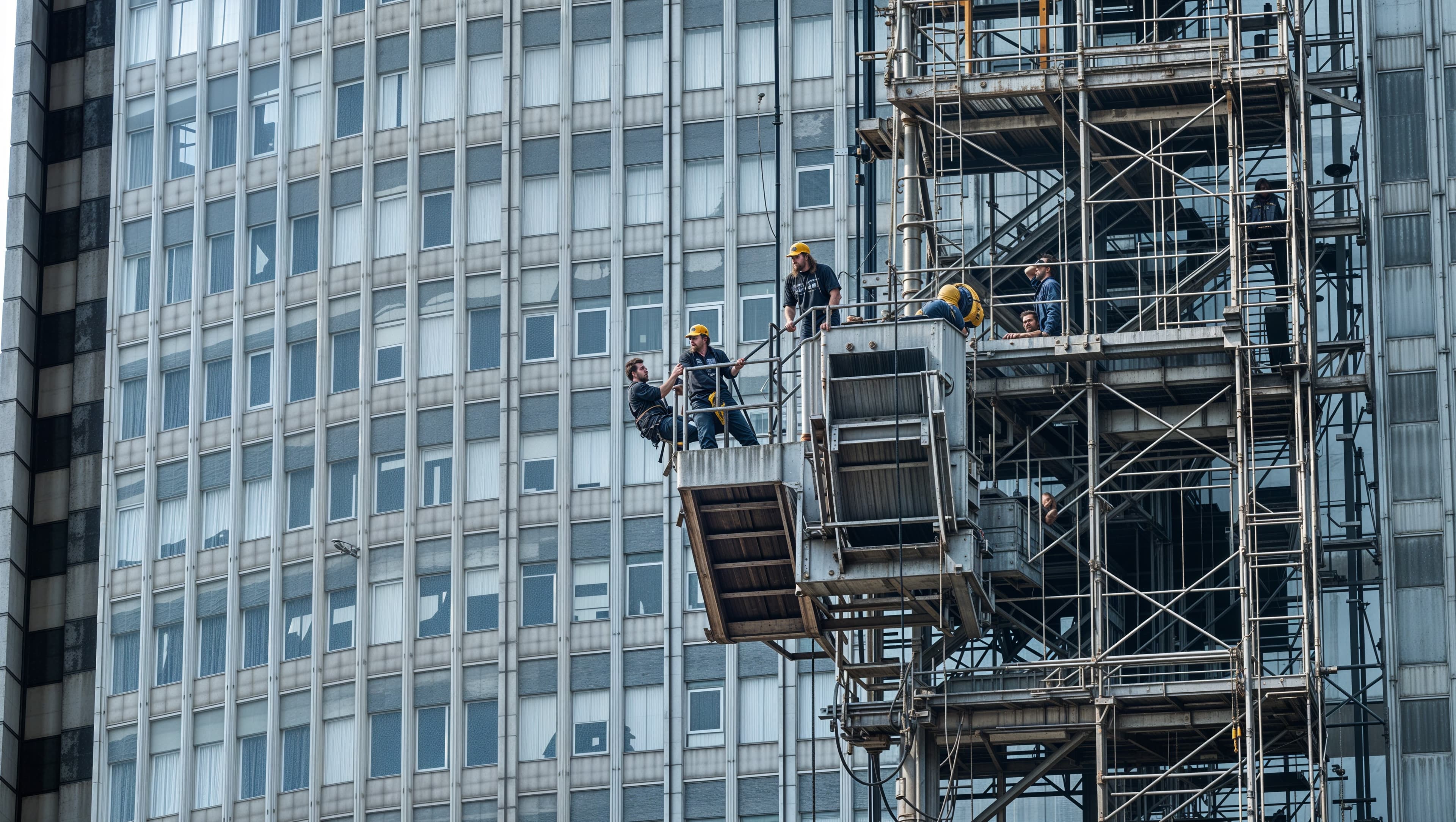
Cleans painted plaster, natural stone, concrete, ACP cladding and masonry using pressure levels and cleaning agents suited to the material.
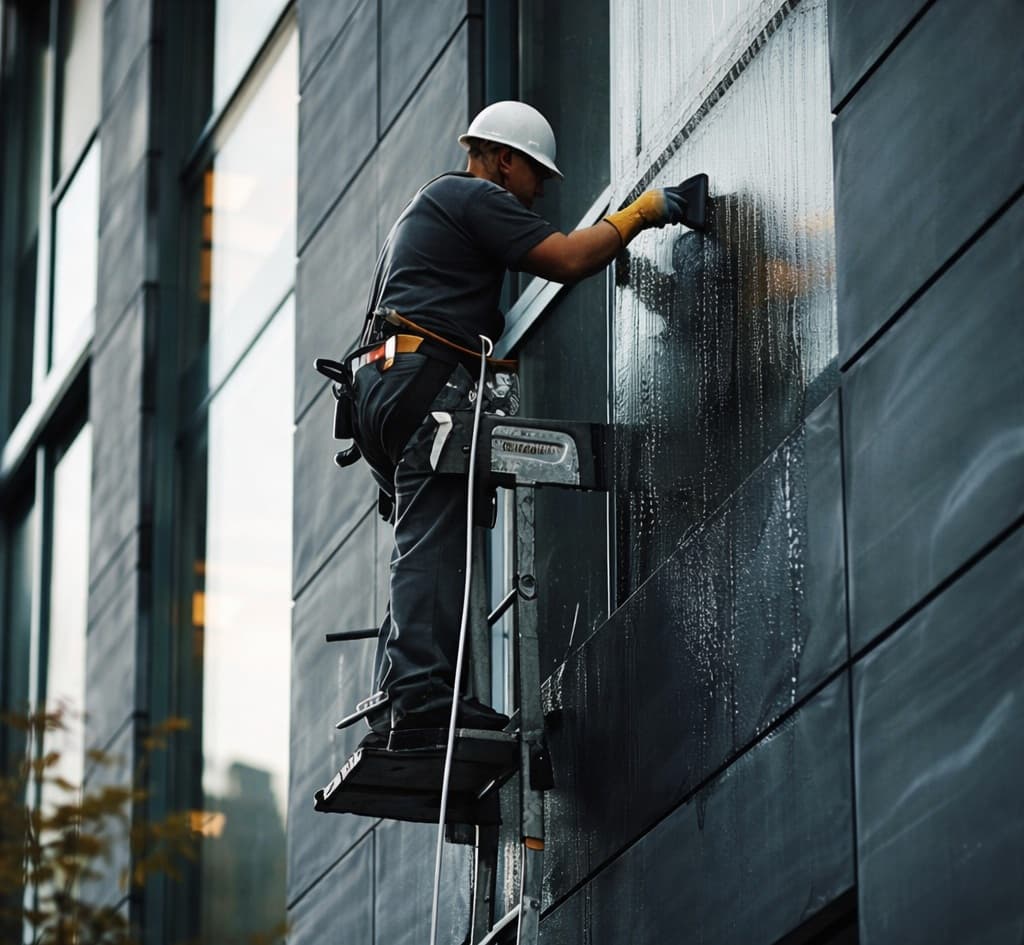
Facade-level window cleaning can include panes, frames, mullions, joints, seals and surrounding decorative elements.

Uses suitable height-access methods such as rope access, suspended platforms or boom lifts, with work-at-height planning.

Coordinates the care of accessible exterior surfaces from upper architectural features to ground-level entrance glass.
Different commercial properties have different exposure levels and presentation requirements. These building types commonly plan professional facade maintenance:
Clean, polished exteriors support a professional impression for clients, stakeholders and employees.
Consistent exterior upkeep supports shared property presentation and tenant expectations.
Large surface areas, wind exposure and access constraints call for planned height-access cleaning.
A well-maintained exterior contributes to the arrival experience and property presentation.
Coordinated exterior cleaning supports facility standards while protecting sensitive areas.
Bright glass and clean entrances help maintain an inviting environment for shoppers.
Expansive glass facades and architectural panels benefit from ongoing maintenance plans.
Educational, government, convention and transit facilities can also benefit from planned exterior care.
The right method depends on building height, surface type, access, existing condition, soiling and site requirements. A site evaluation helps select an approach suited to the property.
Technicians use hand-held brushes, scrapers, squeegees and suitable cleaning agents on reachable architectural features, entrances and low-rise glazing.
Telescopic poles and purified water allow many exterior glass surfaces to be cleaned from ground level.
Trained technicians use industrial rope systems to reach vertical elevations, curtain walls and difficult architectural drops.
Suspended platforms, gondolas and other access equipment are selected for a building's height and architectural profile.
Access methods and cleaning materials should be confirmed for the particular building and work scope.
A structured process helps teams plan access, surface treatment, site safety and quality checks before handover.
Inspect the building layout, surrounding traffic, ground conditions and available access points.
Identify materials such as glass, aluminum, stone or painted walls and assess the type and extent of soiling.
Select suitable access methods and establish work-at-height procedures, PPE requirements and site controls.
Trained personnel follow the plan to remove dirt, water marks and grime while observing site safety procedures.
Review treated surfaces to check that panels, frames and glass meet the agreed quality requirements.
Review completed work with facility management and confirm the site is clean and secure.
Safety is central to commercial and high-rise facade cleaning. Elevated work and specialized equipment require careful planning to protect workers, occupants and the public.
There is no universal schedule for every commercial building. Cleaning frequency depends on environmental exposure, building design and the property's operating requirements.
A site assessment helps specialists evaluate materials and exposure so they can recommend a practical, property-specific maintenance routine.
Both services support building presentation, but they differ in scope, surfaces and access requirements.
Neither service is inherently superior. Window cleaning suits routine, low-reach glass maintenance, while facade cleaning addresses the broader exterior envelope of a commercial property.
Regular exterior building care can provide practical benefits for commercial property owners and facility managers.
Removing accumulated dust, road grime and soot helps restore a cleaner appearance to the exterior.
Routine washing removes pollutants and mineral deposits from glass, cladding and metal trim.
Scheduled work gives facility teams an opportunity to note visible concerns such as worn sealants or loose fittings.
Periodic cleaning manages clouding, streaks and water marks caused by environmental exposure.
A maintained exterior presents a more welcoming environment for tenants, employees and visitors.
Recognizing visible changes can help facility managers plan exterior maintenance before buildup becomes harder to address.
For high-rise work, a site-specific plan helps determine the appropriate access, safety controls and cleaning scope.
SCFM IFM Services provides commercial facade cleaning for corporate offices, commercial complexes, malls, high-rise buildings, hotels, hospitals and IT parks. Service coverage includes South Mumbai, BKC, the Western and Eastern Suburbs, Thane and Navi Mumbai.
For a local service overview, site-specific cleaning options and a quote, explore SCFM's dedicated facade cleaning services in Mumbai page.
The right facade-cleaning scope depends on the building's materials, access, condition and environment. A site assessment helps commercial property teams choose a suitable method and maintenance frequency.
Common questions about commercial facade cleaning.
Facade cleaning removes dirt, pollution, water marks, dust and environmental grime from a building's exterior to help maintain its appearance and condition.
The scope can include exterior glass panels, windows, frames, mullions, concrete walls, natural stone, composite panels and decorative architectural features.
Yes. Professional glass facade cleaning uses suitable tools, water systems and cleaning solutions to address dust, streaks and pollution based on the glass and site conditions.
Yes. High-rise exteriors can be cleaned using suitable access systems such as rope access, suspended platforms or boom lifts, with work-at-height safety planning.
Frequency depends on location, traffic, pollution, weather, height and facade material. A site assessment helps determine a practical maintenance schedule.
Window cleaning focuses mainly on individual glass panes. Facade cleaning can cover the wider building exterior, including cladding, frames, architectural details and high-rise walls.
The method is selected after evaluating building height, surface material, accessibility, structural design, soiling and safety requirements.
Contact SCFM IFM Services by phone or WhatsApp at +91 95294 53682, or submit an enquiry through the website to request a site evaluation and tailored quote.
Work can be planned around building operations, access routes and pedestrian areas. Scheduling and site controls are coordinated with facility management.
Depending on the work, technicians use suitable fall-arrest harnesses, lifelines, helmets, non-slip footwear and inspected rigging equipment.
Many mineral marks can be treated with suitable cleaning or restoration methods. Results depend on the extent of buildup and whether the glass has permanent etching.
Cleaning plans can use pH-balanced products and purified water systems where appropriate for the surface and site, with attention to surrounding areas and runoff.
Rope access can provide technicians with flexible reach across vertical elevations and complex architectural profiles where other access systems may not be practical.
Duration varies with surface area, height, architectural complexity, access method and weather. The project schedule is established after reviewing the site and scope.
Regular cleaning helps manage accumulated contaminants, but it cannot reverse existing damage. Surface condition and suitable maintenance should be assessed by qualified specialists.
Site plans can include drop-zone barriers, cones, warning signs and personnel to help separate pedestrians and vehicles from active work areas.
Cleaning scope can include wiping frames and mullions. Sealant repair is a separate maintenance task, though visible deterioration may be noted during cleaning.
Work at height should be paused when weather or visibility conditions exceed the site's safe operating limits. The schedule can be adjusted with facility management.
High-rise cleaning should be carried out by personnel trained for the access methods and work-at-height procedures required by the project.
Humidity, saline air, monsoon rain and urban dust can contribute to water marks and residue, which is why commercial properties benefit from a schedule based on local exposure.
If your property has accumulated dust, pollution, water marks or visible grime, request an assessment to help determine a suitable cleaning approach.
+91 95294 53682